ESG Materiality Assessments
Find what matters most, through the lens that fits you best

Trusted by ↓










What is an ESG materiality assessment?
An ESG materiality assessment identifies the sustainability topics that matter most to your organisation and its stakeholders.
A single materiality assessment looks at those topics through one lens, financial or impact, and gives you an evidence-based view of where to focus, what to report and where your biggest risks and opportunities lie.
A double materiality assessment combines both lenses, looking at how sustainability issues affect your business and how your business affects people and the planet.
Done well, it will also show you commercial opportunities you might otherwise miss.

What's the difference between financial and impact materiality?
Financial materiality looks from the outside in. It identifies the sustainability-related risks and opportunities that could affect your cash flows, access to finance or cost of capital.
Impact materiality looks from the inside out. It shows where your organisation affects people and the planet, positively or negatively, across your operations and value chain.

Which materiality lens do I need?
It depends on what you report against and what you want to achieve.
Financial materiality suits UK SRS, ISSB-aligned reporting (IFRS S1 and S2) and investor conversations.
Impact materiality suits GRI, EcoVadis and B Corp, and gives you a clearer view of the difference you make.
Unsure? We’ll look at your reporting requirements, ambitions and business realities, then recommend the lens that fits.

Do I need a Double Materiality Assessment?
If you report under CSRD, or want both perspectives at once, you’ll need a double materiality assessment. Find out more about our DMA support here.
If not, a single lens can still give you a strategic view of what matters most and a practical plan for what to do next. View our process below.

Our ESG materiality support
Here’s how we’ll get you from a long list of issues to a clear plan ↓
Step 1
Understanding your bigger picture
First, we’ll get to know your sector, business model and value chain, and the pressures and expectations that come with them. From here, we’ll build a tailored list of topics that matter to your organisation and stakeholders. Everything is built around you from day one, so nothing important slips through.

Step 2
Picking the right lens
For a financial lens, we’ll build on relevant industry guidance, including the SASB industry standards, to identify the risks and opportunities that could affect your prospects.
For an impact lens, we’ll engage your team and stakeholders to reveal your most significant actual and potential impacts across your operations and value chain.

Step 3
Weighing up what really matters
For financial materiality, we’ll take a proportionate approach, quickly ruling out clearly material and immaterial topics and focusing detailed analysis where it matters: emerging, organisation-specific or less clear-cut issues. We’ll bring your key stakeholders into the process as and when it makes sense.
For impact materiality, we’ll help your stakeholders - including those without a voice - judge the scale and reach of your impacts, and how difficult negative impacts would be to put right. We’ll keep it simple for everyone involved, and back every decision with evidence you can trust.

Step 4
Bringing it to life
Then we’ll turn the results into a materiality matrix your team will actually use.
Choose financial materiality, and you’ll see what matters for UK SRS, ISSB-aligned reporting and investor conversations.
Choose impact materiality, and you’ll understand what matters for GRI, EcoVadis, B Corp and your wider strategy. (And you’ll know exactly where to focus next.)


Step 1
Understanding your bigger picture
First, we’ll get to know your sector, business model and value chain, and the pressures and expectations that come with them. From here, we’ll build a tailored list of topics that matter to your organisation and stakeholders. Everything is built around you from day one, so nothing important slips through.

Step 2
Picking the right lens
For a financial lens, we’ll build on relevant industry guidance, including the SASB industry standards, to identify the risks and opportunities that could affect your prospects.
For an impact lens, we’ll engage your team and stakeholders to reveal your most significant actual and potential impacts across your operations and value chain.

Step 3
Weighing up what really matters
For financial materiality, we’ll take a proportionate approach, quickly ruling out clearly material and immaterial topics and focusing detailed analysis where it matters: emerging, organisation-specific or less clear-cut issues. We’ll bring your key stakeholders into the process as and when it makes sense.
For impact materiality, we’ll help your stakeholders - including those without a voice - judge the scale and reach of your impacts, and how difficult negative impacts would be to put right. We’ll keep it simple for everyone involved, and back every decision with evidence you can trust.

Step 4
Bringing it to life
Then we’ll turn the results into a materiality matrix your team will actually use.
Choose financial materiality, and you’ll see what matters for UK SRS, ISSB-aligned reporting and investor conversations.
Choose impact materiality, and you’ll understand what matters for GRI, EcoVadis, B Corp and your wider strategy. (And you’ll know exactly where to focus next.)
Compliance isn’t the biggest prize
The real value is in what we can help you do with your results.
A single materiality assessment will help you meet a reporting requirement. And used well, it will also help you win investor confidence, get ahead of emerging risks and opportunities, and tackle your biggest impacts on people and planet.
Got big plans? You’ve found your people.

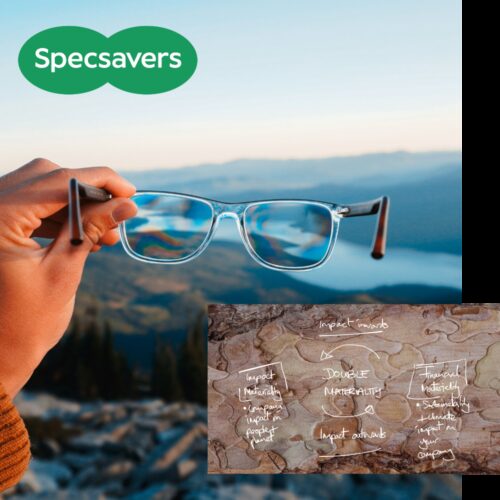
Specsavers case study
We engaged hundreds of stakeholders across Specsavers’ global value chain to deliver a CSRD-ready double materiality assessment.
This included 112 colleague responses, 18 supplier interviews, 17 senior-leader interviews and engagement with customers, partners, NGOs and trade bodies. Specsavers' DMA is now a source of real strategic insight, revealing the impacts, risks and opportunities that matter most across its entire value chain.
We're never cookie-cutter
And nor are our fees.
Contact us for a bespoke quote or book a call so we can learn more about your exact needs and get to know you a little. From there, we’ll put together your proposal with full costings.

“Bioregional transformed our Double Materiality Assessment from a reporting requirement into a source of real strategic insight, revealing the impacts, risks and opportunities that matter most across our entire value chain. The outcome is a CSRD-compliant process that strengthens resilience, unlocks innovation and enables more confident, credible decision-making.”

Jen Wakely
Global ESG Reporting Lead, Specsavers
"Thanks to Bioregional’s support on our Double Materiality Assessment, we're not only better positioned to meet the challenges of a changing world, but we're also strengthening our position as a sustainability leader within our industry."

Sam Warren
Sustainability Manager, Woodland Group
30 years. 30+ awards.
Our data geeks have checked, and that's a pretty good ratio.
And as a social enterprise, we’re committed to maximising our own impact, devoting time and resources to influencing policy and industry practices.
In other words: we really mean it.





Say hello
Get in touch with our Director of Sustainable Business, Debbie Luffman, and discover how we can help you.
-
Ambitious, like you
-
Brilliantly business-literate
-
We make it easy

Thank you
We'll be in touch within two working days.
Skip the email tennis ↓
Let's chat when it suits you.