Future Homes Standard 2026: everything developers need to know


Is the Future Homes Standard 2026 good enough to meet our climate goals and help residents lower their bills?
My TLDR answer: nope. While the Future Homes Standard (FHS) is a significant step forward, in its current form, it’s not enough.
At Bioregional, we’ve been closely involved in shaping the FHS, from convening a joint industry response with partners across the sector, as well as supporting housing developers and local authorities working toward higher ambition.
Now that the final standard has been published, I asked our team for their initial hot takes.
A stronger foundation and a win for industry collaboration
When the consultation was released in late 2023, we were clear that ambition needed to increase. Together with industry partners, we called for the adoption of the stronger option, and it’s encouraging to see that reflected in the final policy.
A key success is the requirement for solar PV. As our CEO, Sue Riddlestone OBE, sets out:
40% solar PV is crucial to reduce bills, avoid retrofit later, boost the country’s shift away from fossil fuels, and support the grid.
Sue Riddlestone on LinkedIn
This has not only been included but strengthened, becoming a functional requirement that cannot be offset. Alongside this, the FHS brings long-awaited clarity to the market, providing a consistent baseline for delivery across the sector.
Improvements like these illustrate the power of collaboration within our industry and serve as encouragement as we continue to advocate for sustainability.
Mind the gap: we need to talk about performance
Despite this progress, one of the most critical issues remains unresolved: how homes actually perform once built.
We have consistently called for mandatory performance evaluation, and its absence is a major concern.
From my perspective, it’s disappointing that there’s still no requirement to check whether homes actually deliver the comfort and bill savings promised - the performance gap remains baked in.
This is not just a technical detail - it is fundamental to outcomes. Without it, the long-standing performance gap risks continuing, with consequences for both residents and carbon targets.
Embodied carbon: still a whopping elephant in the room
Another major omission is the lack of action on embodied carbon.
Embodied carbon is still ignored. Focusing only on operational energy leaves a major whole‑life net‑zero gap that the policy simply sidesteps.
Lewis Knight on LinkedIn
Embodied carbon currently makes up 20% of the UK’s built environment emissions, so a standard focused only on operational energy performance leaves a whopping portion (official technical term) of a building's carbon impact unregulated. If we are serious about net zero, this is an area that policy has to address.
Let’s get technical
Beyond headline policy decisions, technical specifications matter and here we have some areas of concern.
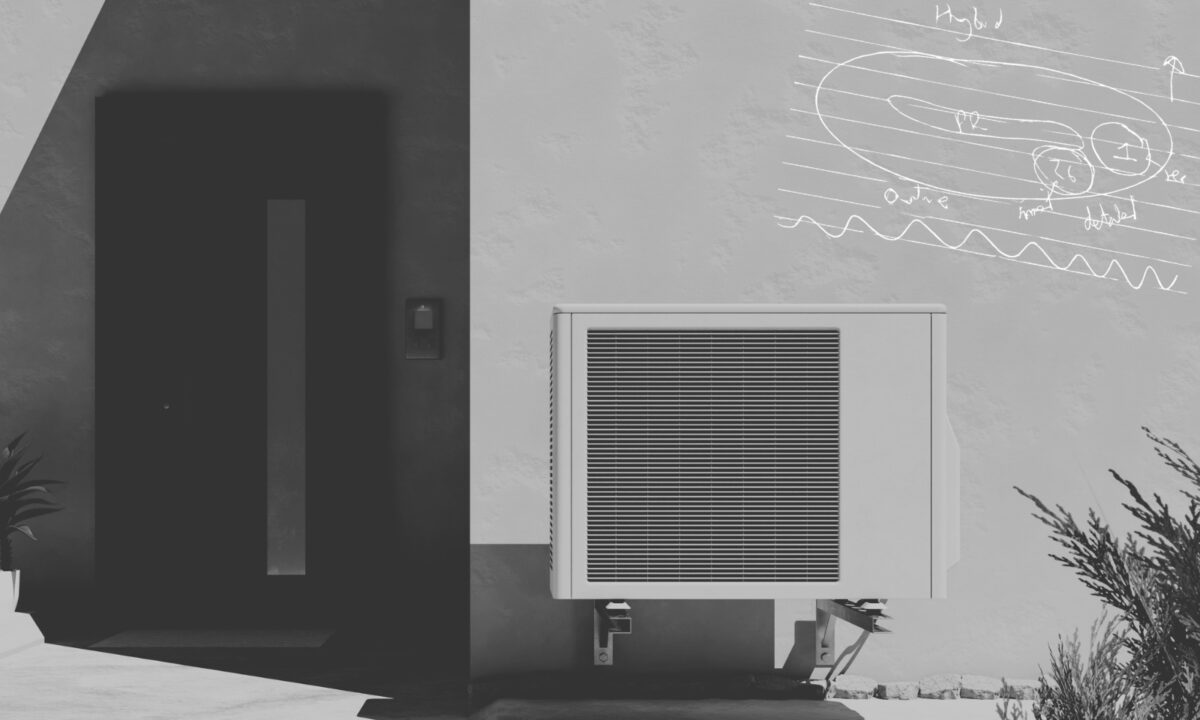
Our Principal Technical Consultant, Adam Lane, highlights a key issue with heat pump assumptions:
Within SAP 10.3, the notional heat pump assumes a Seasonal Coefficient of Performance (SCOP) of 2.5 (D-Rating) … And I feel this is a softening that wasn’t necessary.
Adam Lane on LinkedIn
This seemingly small change has wider implications for system performance, comfort, and running costs. It also risks lowering the bar at a point when better-performing solutions are already widely available.
Timing is everything
While the direction of travel is positive, the gap between policy announcement and full implementation is a real problem: we’re still consenting and building homes that will lock households into higher bills and avoidable emissions for decades.
As Ada puts it:
The new Part L will come into force in 2027, with a one-year transitional period. More non-future-proof homes will be built in the meantime. This will expose occupants to volatile fuel prices amid ongoing global conflicts.
Ada Lee on LinkedIn
In the current context of global uncertainty, this delay carries real risks for households and the wider system.
The role of local authorities is under threat
One of the defining strengths of the UK’s approach to sustainable development has been the leadership shown by local authorities.
Our Senior Consultant, Ada Lee explains the risk that progress could be undermined by wider policy changes:
If the Draft NPPF is adopted as consulted, local authorities' abilities to set their own energy efficiency standards will be limited. They may have to rely on the new Part L to deliver their parts on net-zero. We know that this is not enough. We will fail to reach the net-zero 2050 target as a nation.
Ada Lee on LinkedIn
We’ve been vocal about the limitations of the draft NPPF. Maintaining the ability for local authorities to go further and faster than national minimums is critical for our legally-binding climate targets, and progression towards delivering the homes people need.
The floor should never be the ceiling
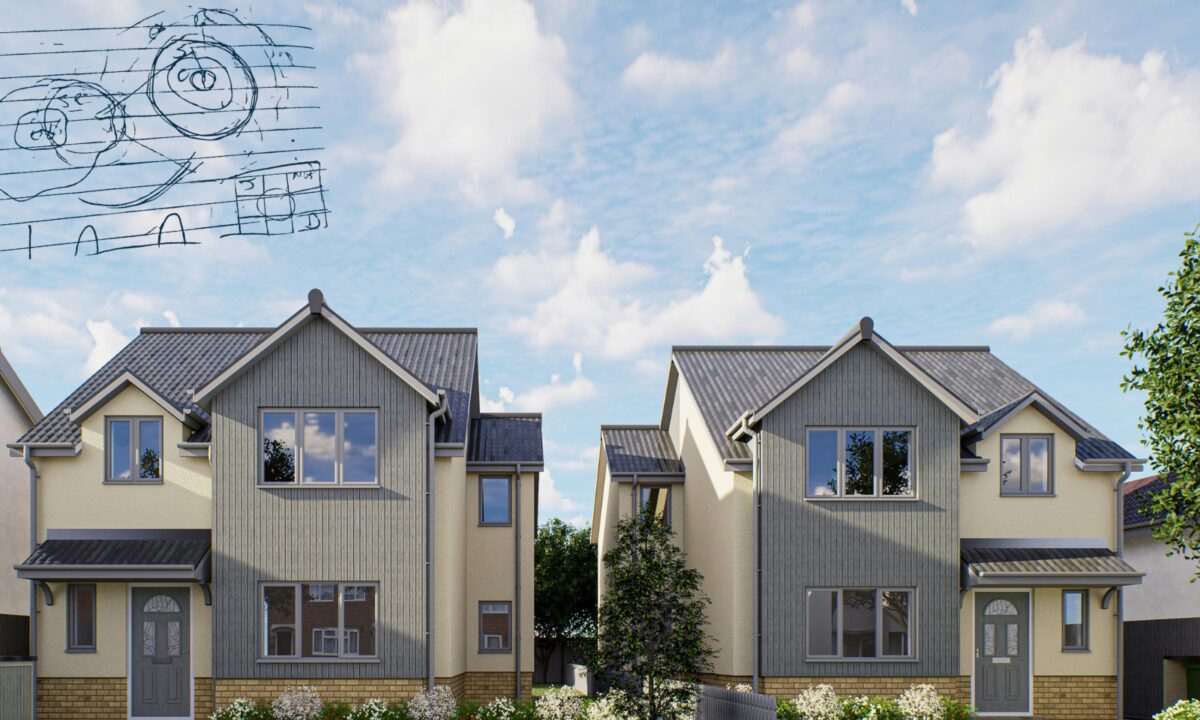
The overarching message from across Bioregional is clear: the Future Homes Standard represents significant movement in the right direction. As Sue notes, going back to our original campaign goals:
We have secured two out of our five asks, with processes in train for the other three.
Sue Riddlestone on LinkedIn
But currently, the FHS still doesn’t go far enough. While important gaps remain in performance, embodied carbon, technical robustness, and policy alignment, there’s still work to be done.
We can – and must – continue to raise the ambitions of the industry.
What next?
- Continuing to raise ambition - supporting clients, developers, and local authorities to go beyond compliance
- Ensuring effective implementation - through skills, supply chains, and robust delivery – we’re here to support developers and local authorities every step of the way.
Our experience shows that higher standards are not only achievable but already being delivered across the UK. The challenge now is scaling that ambition consistently.
Get in touch if you need support or guidance on what the FHS means to you.
About our team:
Lewis Knight, Director of Sustainable Places
Adam Lane, Principal Technical Consultant
Dr Ada Lee, BSc MPhil PhD, Senior Consultant
Sue Riddlestone OBE, CEO and Co-founder
Say hello
Discover how we could support you
-
Beyond compliance
-
Never cookie-cutter
-
Enablers not theorists

Thank you
We'll be in touch within two working days